
Gurgling Toilets & Slow Drains in New Braunfels? What That Noise Really Means
When a toilet starts gurgling or your sinks drain like they’re moving through syrup, your plumbing is talking to you. In New Braunfels, where older cast-iron lines meet newer PVC and hard water leaves extra buildup, those sounds are often early warnings—not just “quirks.” The good news: once you know why a system gurgles or slows down, the fix becomes clear and you can stop small issues from turning into weekend-ruining emergencies.
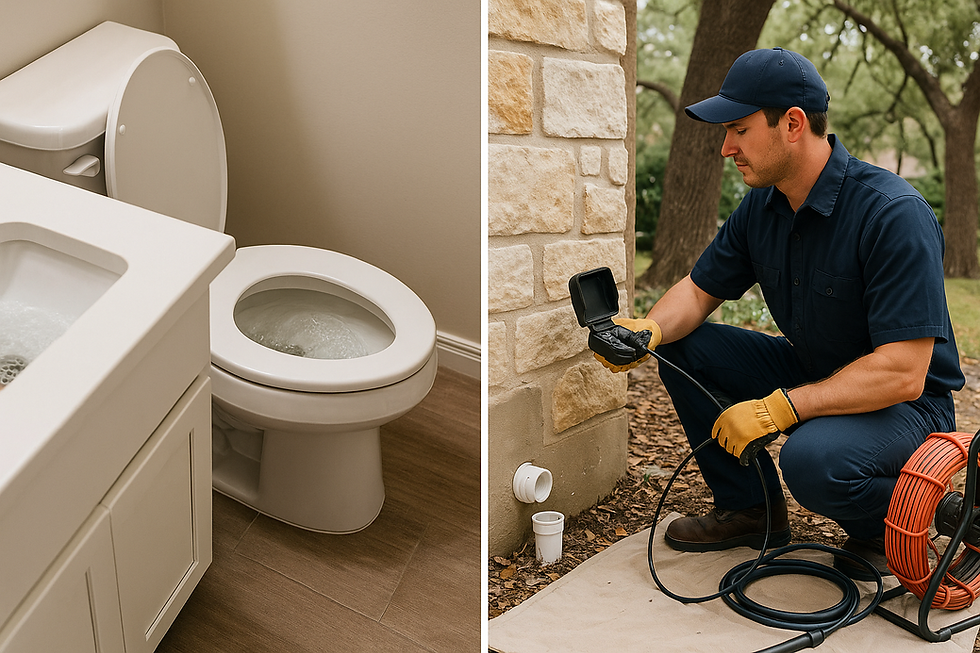
This guide breaks down what each symptom really means, what you can safely try first, and when to bring in a pro. We’ll also show how our team at Emergency Plumber LLC diagnoses the root cause fast and gets things flowing again with Drain Cleaning, Hydro Jetting, and Plumbing Repairs—without the upsell or guesswork.
Why drains gurgle (and why it’s not “normal”)
That hollow “blub-blub” after a flush or when a nearby sink drains is usually one of two things:
Air is being pulled through your trap because a downstream partial clog is creating negative pressure. The system tries to grab air from wherever it can—often your toilet or sink P-trap—so you hear the gulping sound.
A venting issue is preventing air from entering the system properly. Plumbing needs air just like you do; without it, the flow is sluggish and noisy. Blocked or undersized vents (birds’ nests, leaves, or an improperly tied-in remodel) can trigger gurgles across multiple fixtures.
Either way, a gurgle is a pressure problem caused by restriction or vent failure. Left alone, pressure spikes can start siphoning traps dry (hello, sewer odor) or push waste where it doesn’t belong.
Slow drains: not just hair and soap
Yes, hair and soap scum matter. But in New Braunfels we routinely see a few local patterns:
Hard water scale narrows pipe walls and “grabs” debris.
Kitchen grease from cooking (especially when poured hot) cools and congeals a few feet down the line.
Cast iron corrosion flakes in older homes create ledges that catch wipes, floss, and paper.
Yard movement and shallow lines can create small bellies where sludge settles.
Tree roots sniff out tiny pipe joints and grow through them like threads into fabric.
That’s why symptom searches like “slow kitchen sink New Braunfels” often end with us finding a partial mainline clog or vent problem, not just a little hair in the trap.
Quick self-check: what your symptoms are telling you
Use this home checklist to narrow the cause before you call:
Only one fixture is slow (e.g., one bathroom sink): Likely a local trap/branch clog.
Multiple fixtures in the same bathroom are slow/gurgling: The branch line serving that group is restricted.
Toilet gurgles when washer drains or tub empties: The mainline or a common vent is impacted.
All drains slow + occasional sewer smell: Think vent blockage or mainline restriction.
Floor drain burps during showers: Strong sign of a downstream main restriction.
Gurgling after heavy rain: Infiltration or root activity may be letting groundwater push into older lines.
If your toilet backs up into the tub or shower, stop using water and find the exterior cleanout. If you see standing water at the cleanout cap—or removing the cap releases pressure—that’s a mainline problem. This is one of those “call now” moments, ideally through Emergency Services (via the Plumbing Repairs page) if you’re seeing active overflow.
What not to do (learned the hard way by many homeowners)
Don’t keep flushing “to clear it.” You’re just stacking water behind a blockage.
Go easy on chemical drain cleaners. They can sit in one spot, heat up, damage finishes, and they don’t chew through roots, hardened grease, or scale.
Don’t snake blindly if your home has older, fragile lines—you can worsen a crack or push a wad deeper.
Don’t ignore intermittent gurgles. That’s the polite warning before an impolite backup.
Safe first steps before you call
Boiling-hot water rinse (kitchen only). If the kitchen line is sluggish from cooled grease, carefully send a kettle or two of hot water, wait 5–10 minutes, then a second rinse.
Plunge correctly. Use a cup plunger for sinks, a flange plunger for toilets. Block overflow holes with a wet rag to get real pressure.
Clean the trap (hand basin). Place a bucket, unscrew slip nuts, and clear the trap. Reassemble with intact washers—no cross-threading.
Peek at the roof vent (from the ground). If leaves love your roofline, a vent could be capped. Don’t climb if you’re not set up for roof safety—just note it for the tech.
If symptoms persist across multiple fixtures, you’re out of DIY territory. That’s mainline or venting, and it’s exactly what our Drain Cleaning team tackles all day.
How we actually fix gurgles and slow drains (no guessing)
We start with listening (your story matters), then locating (which fixtures are affected), and finally verifying with the right tool:
1) Diagnose with a pro-grade auger or camera
For single-fixture issues, we clear with the correct drum auger and test flow.
If symptoms suggest a main restriction, we camera the line via a cleanout. This tells us if it’s grease, scale, roots, or a structural defect like a belly or crack.
2) Choose the right cleaning method
Cable (snaking): Great for soft clogs and restoring a pilot hole through wipes/grease.
Enzyme/biological treatments: Helpful maintenance after mechanical clearing for kitchens.
Hydro jetting: When we need the line truly clean—not just “open.” A high-pressure water stream scours grease layers, cuts roots, and blasts scale from pipe walls. It’s the difference between leaf-blowing your driveway and pressure-washing it.
If a company always recommends jetting or never recommends it, that’s a red flag. We recommend it when it’s the right tool based on what the camera shows. That transparency is a big part of why New Braunfels homeowners call us first and keep our number.
3) Repair when cleaning isn’t enough
If the camera reveals a broken section, collapsed line, or a severe belly that keeps refilling with sludge, we discuss spot repair vs. replacement. With Plumbing Repairs, you see options side by side—scope, timeline, and total installed price—before we touch a shovel.
Hydro jetting 101 (and when it’s a money saver)
Hydro jetting is like a car wash for your sewer line. A specialized nozzle pulls itself through the pipe and sprays water in a 360° pattern to scour buildup. It’s especially effective for:
Restaurants or heavy-cooking homes with stubborn grease films.
Root-prone lines where snaking just trims the ends (jetting cuts and flushes the fibers).
Scale-choked cast iron where you want the diameter back to near-original before you plan bathroom upgrades.
Is it always necessary? No. But when used after a camera inspection on the right problem, it reduces repeat calls and keeps your line cleaner, longer. That’s why we list it separately as Hydro Jetting—so you can see exactly what you’re getting and why.
Why toilets often tell the truth first
Toilets move a lot of water quickly. If the main is constricted, that surge meets resistance and tries to suck air from other fixtures (hello, gurgle). If the vent is blocked, the toilet may double-flush strangely or burp after refilling. Think of the toilet as a pressure gauge: weird sounds there often mean the problem is beyond the toilet itself.
“It comes and goes”—intermittent symptoms explained
Intermittent slowdowns or gurgles usually mean the blockage is mobile (grease sloughs, wipes shifting) or the vent is partially obstructed and changes with wind or moisture. That’s why your drains can be perfect on Tuesday and cranky on Friday. Intermittent equals developing—and it’s cheaper to fix now than after an overflow.
Rentals, Airbnbs, and guest baths: special cases
Short-term rentals around New Braunfels often see:
Wipes and “flushable” labels (they’re not, for most home lines).
Sand and hair from river days.
Kitchen grease from quick cook-and-go guests.
If you own a rental, consider a camera baseline and preventative jet at turnover season. We also provide quick do/don’t cards for guests and can install easy-clean hair catchers that don’t scream “rules.”
Prevention checklist (that actually works)
Grease goes in a can, not the drain. Wipe pans with a paper towel before washing.
Strainers in showers and kitchen sinks. Empty them often.
Quarterly enzyme treatment for kitchens; it helps keep bio-slime from building.
Annual mainline check if you’ve had root issues before.
Mind the landscaping. Trees love water lines—choose species and placement carefully.
Know your cleanout location. Label it; it’s the front door for fast service.
Want a one-and-done tune-up? We can combine a camera inspection with targeted Drain Cleaning and a clear plan for next steps if needed.
Why New Braunfels homeowners trust Emergency Plumber LLC
We solve the actual problem. A quick punch-through might get things moving today, but we’d rather camera, show you the why, and fix it right.
Straight prices, clear choices. You’ll see repair vs. replace, snake vs. jet, and what each costs before we roll any tool.
Prepared trucks, same-day solutions. We carry the right heads, blades, and nozzles plus common repair parts to finish in one visit when possible.
Respect for your home. Floor protection, clean work, and we leave the area better than we found it.
Local know-how. We’ve worked on everything from mid-century cast iron in older neighborhoods to brand-new PVC with builder-grade venting—so we plan for what your house actually has.
When you’re ready, start with Drain Cleaning for diagnosis and clearing, Hydro Jetting if we find thick buildup or roots, or Plumbing Repairs when the line needs a lasting fix.
FAQs
Is a single gurgle after a flush a problem?
It’s an early sign. If it’s rare and you have no other symptoms, keep an ear on it. If it happens often—or other drains slow—schedule a check.
Will a store-bought snake fix my mainline?
Unlikely. Those are designed for short, small-diameter traps. Mainlines need pro gear and often a camera to confirm you actually solved it.
How do I know if it’s a vent vs. a clog?
Vents often cause system-wide weirdness without obvious localized debris. But symptoms overlap—our camera and flow tests settle it quickly.
Can hydro jetting damage my pipes?
Used correctly, no. We match nozzle type and pressure to your pipe material and condition—that’s why inspection comes first.
How fast can you come out?
If you’re backing up or can’t use water, that’s priority same-day. Hit Plumbing Repairs for scheduling or choose the 24/7 route if it’s urgent.
Your next step (before it gets messy)
Mild symptoms (one fixture): Book a targeted Drain Cleaning—we’ll clear the branch and check for early warning signs.
Multiple fixtures or gurgling toilets: Ask for a camera + clearing visit. If the line’s coated in grease/scale or rooted, we’ll recommend Hydro Jetting with a clear before/after plan.
Active overflow or sewage backup: Use Plumbing Repairs and select emergency service so we can prioritize you.
Don’t let a little “blub-blub” become a big bill. We’ll find the cause, show it to you clearly, and fix it the right way—so your drains go back to being invisible, exactly how they should be.


Comments